Histoire et aviation
En 1945, Le Figaro évoque en une un accident aérien qui a causé la mort de 15 personnes au 79e étage de la plus haute tour de New York. Le quotidien s’interroge sur une éventuelle attaque-suicide japonaise.
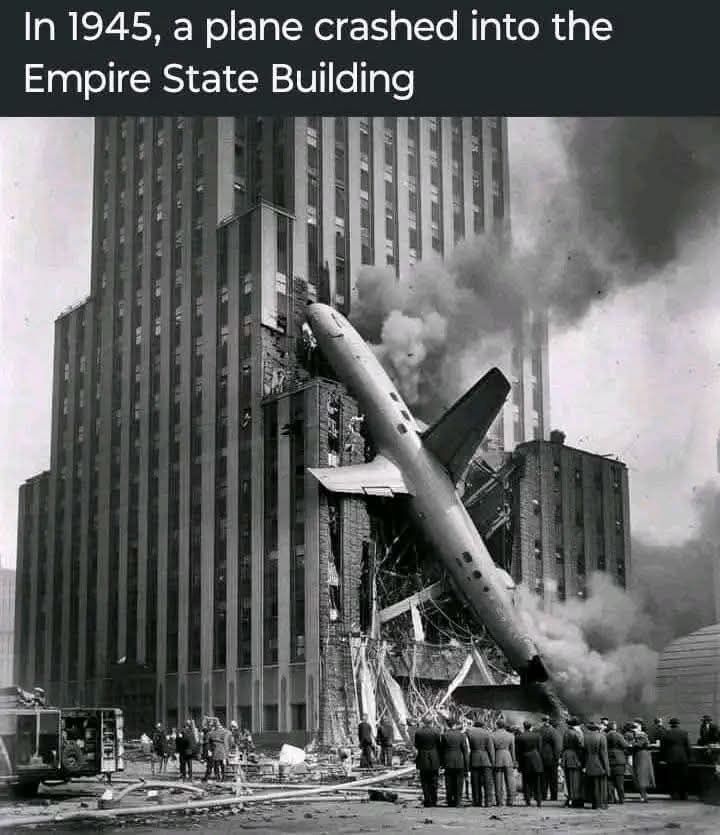
En ce 29 juillet 1945, Le Figaro qui couvre largement le procès du maréchal Pétain, accorde cependant un petit espace en Une à cet incroyable et dramatique fait divers américain. L’Empire State Building, qui est alors le plus haut bâtiment du monde venait en effet d’être frappé la veille de plein fouet par un avion bombardier à hauteur des 78e et 79e étages (et non le 86e comme indiqué dans le titre). Bilan: 14 morts dont 3 membres d’équipage et 11 personnes travaillant dans l’immeuble.
Alors que la Seconde guerre mondiale s’est achevée en Europe le 8 mai, le Japon, lui, ne s’est toujours pas rendu à ce moment-là. Une situation qui pousse le Figaro à s’intéresser à la thèse d’un éventuel avion-suicide japonais. Mais la piste principale est déjà celle de l’accident dû au brouillard. «En plein brouillard, hier, à New York, un avion s’est jeté sur le sommet d’un gratte-ciel. Nul dans la demi-obscurité ne put être le témoin de ce drame affreux (…). Le choc fut épouvantable mais à ce moment le ciel était si bas qu’on distinguait à peine les derniers étages de l’immeuble.»
Le type d’avion est immédiatement identifié comme un «bombardier militaire bi-moteur» et la suite dira qu’il s’agissait bien d’un accident puisque l’avion était un B-25 Mitchell américain. Selon la légende, les conditions météo étaient tellement délicates ce matin-là que le pilote de l’avion aurait dit aux contrôleurs aériens: «…c’est très difficile, je ne vois même pas l’Empire State…»
Toutes similitudes avec les évènements du 11 septembre 2001 serait fortuite et pure coïncidence .

History and aviation
In 1945, Le Figaro reported on its front page a plane crash that killed 15 people on the 79th floor of New York’s tallest tower. The newspaper speculated about a possible Japanese suicide attack.
On July 29, 1945, Le Figaro, which extensively covered the trial of Marshal Pétain, nevertheless gave a small front page to this incredible and dramatic American news. The Empire State Building, then the tallest building in the world, had in fact been hit the day before by a bomber at the height of the 78th and 79th floors (and not the 86th as the headline indicated). The toll: 14 dead, including 3 crew members and 11 people working in the building.
While World War II ended in Europe on May 8, Japan still hadn’t surrendered at that point. This situation prompted Le Figaro to explore the theory of a possible Japanese suicide plane. But the main theory is already that of an accident caused by fog. « In the middle of the fog yesterday in New York, a plane crashed into the top of a skyscraper. No one in the semi-darkness could witness this terrible tragedy (…). The impact was terrible, but at the time the sky was so low that the top floors of the building could barely be seen. »
The aircraft type was immediately identified as a « twin-engine military bomber, » and later it was said that it was indeed an accident, as the aircraft was an American B-25 Mitchell. Legend has it that the weather conditions were so difficult that morning that the pilot told air traffic controllers, « …it’s very difficult, I can’t even see the Empire State… »
Any similarities with the events of September 11, 2001 would be fortuitous and purely coincidental.

Stéphane Guibert (Facebook) / Sur (VK) / CrowdBunker/ X
