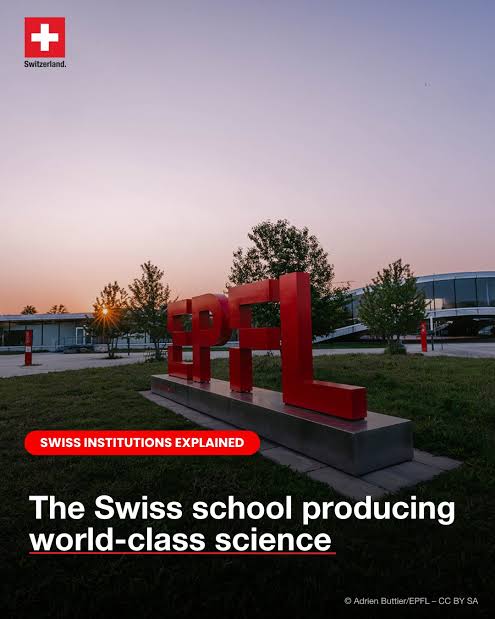
Comment expliquer la quasi gratuité des universités Suisses et le taux élevé des réussites scolaires ?
Un investissement public : Le coût réel de la formation est très élevé, mais il est majoritairement financé par les contribuables suisses (via les budgets des cantons et de la Confédération pour les Écoles polytechniques fédérales comme l’EPFZ).
L’égalité des chances : La politique publique vise à limiter les barrières financières et sociales pour garantir l’accès à l’enseignement supérieur à l’ensemble de la population, évitant ainsi un système élitiste ou l’endettement massif des étudiants.
L’État considère l’éducation supérieure comme une fabrique de main-d’œuvre qualifiée (médecins, ingénieurs, chercheurs). Les diplômés restent le plus souvent en Suisse, exercent des emplois à forte valeur ajoutée et remboursent indirectement ce coût par le biais de leurs impôts et de leur contribution au PIB.
Petit bémol :
Bien que les frais d’inscription soient bas, le coût de la vie quotidienne en Suisse (logement, nourriture, assurances) reste l’un des plus élevés au monde.
Il est donc nécessaire de prévoir une solution de logement solide (chez des proches ou des amis) avant de s’engager dans un cursus en Suisse, mais les résultats sont probants.

How can one explain the fact that Swiss universities are virtually free of charge, as well as the high rate of academic success?
A public investment: The actual cost of the education is very high, but it is largely funded by Swiss taxpayers (through the budgets of the cantons and the Confederation, which support the Federal Institutes of Technology, such as ETH Zurich).
Equal opportunity: Public policy aims to limit financial and social barriers to ensure access to higher education for the entire population—preventing the emergence of an elitist system or the mass indebtedness of students.
The state views higher education as a factory for a skilled workforce (doctors, engineers, researchers). Graduates typically remain in Switzerland, hold high-value-added jobs, and indirectly recoup the cost of their education through their taxes and their contribution to the GDP.
One small drawback:
Although tuition fees are low, the cost of daily living in Switzerland (housing, food, insurance) remains one of the highest in the world.
It is therefore necessary to secure a solid accommodation arrangement (with family or friends) before committing to a course of study in Switzerland, but the results are compelling.

Stéphane Guibert (Facebook) / Sur (VK) / CrowdBunker/ X
