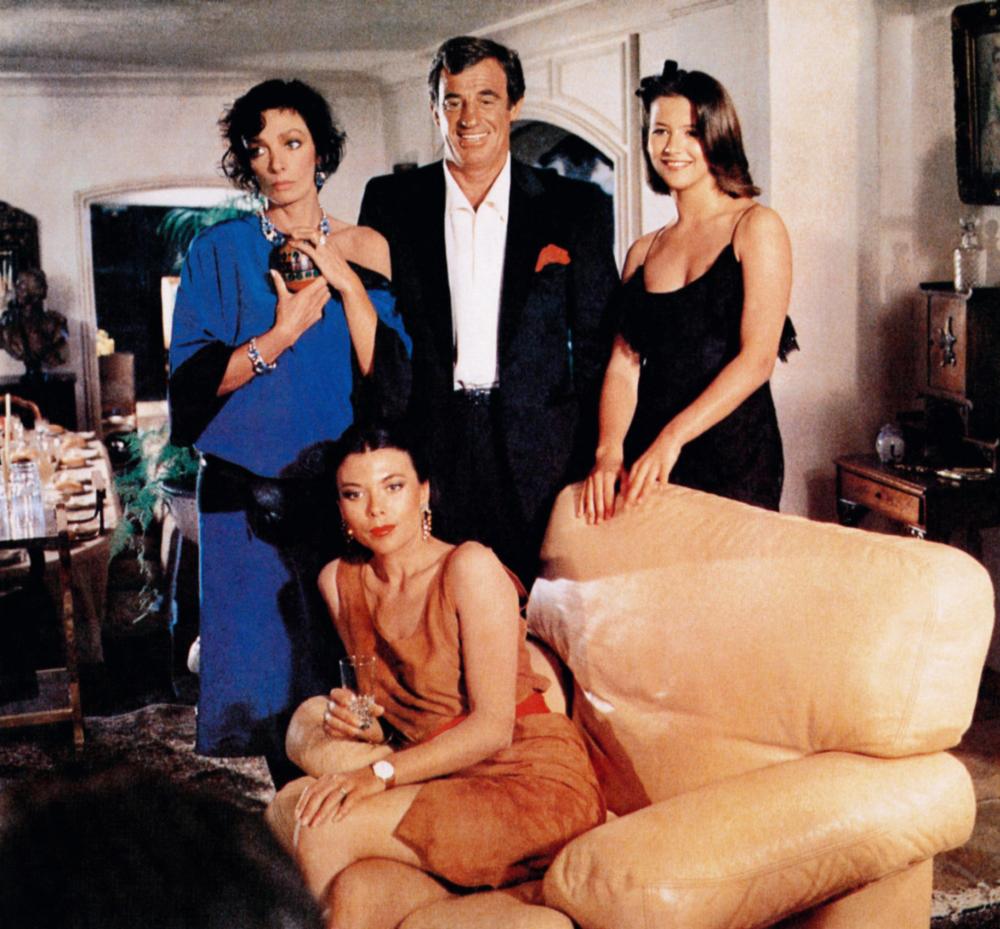
Joyeuses Pâques est un film français sorti le et réalisé par Georges Lautner, adapté de la pièce de théâtre éponyme de Jean Poiret..
Synopsis:
Stéphane Margelle est un riche industriel et surtout un séducteur. Persuadé que sa femme Sophie a pris l’avion dans la journée, il ramène chez lui Julie qui ne sait pas où dormir. Mais une grève surprise empêche Sophie de partir et elle rentre à l’improviste en pleine nuit et les surprend. Pour s’en sortir, Stéphane fait passer Julie pour sa fille, dont il aurait oublié de lui parler. De plus, lors de cette discussion confuse, Julie invente le fait qu’elle se trouve enceinte. De ces mensonges vont en découler bien d’autres et Stéphane va s’empêtrer toujours davantage dans les ennuis.
Distribution:
Jean-Paul Belmondo : Stéphane Margelle
Sophie Marceau : Julie
Marie Laforêt : Sophie Margelle
Rosy Varte : Marlène Chataigneau, la mère de Julie
Le magnifique:
Le Magnifique est un film franco-italien réalisé par Philippe de Broca, sorti en 1973. C’est un pastiche des films d’espionnage et des James Bond.
Au Mexique, un requin dévore un espion prisonnier d’une cabine téléphonique jetée à la mer. Pour enquêter sur cet événement, on appelle à la rescousse l’agent français Bob Saint-Clar, le meilleur agent secret du monde. Celui-ci est dépêché sur place où l’attend la très belle Tatiana, agent secret également.
Sur une plage exotique, ils sont attaqués par une horde d’ennemis envoyés par l’infâme colonel Karpov, le chef des services secrets de la république populaire d’Albanie et ennemi de toujours de Bob Saint-Clar. Parmi eux, une femme de ménage passe l’aspirateur dans le sable.
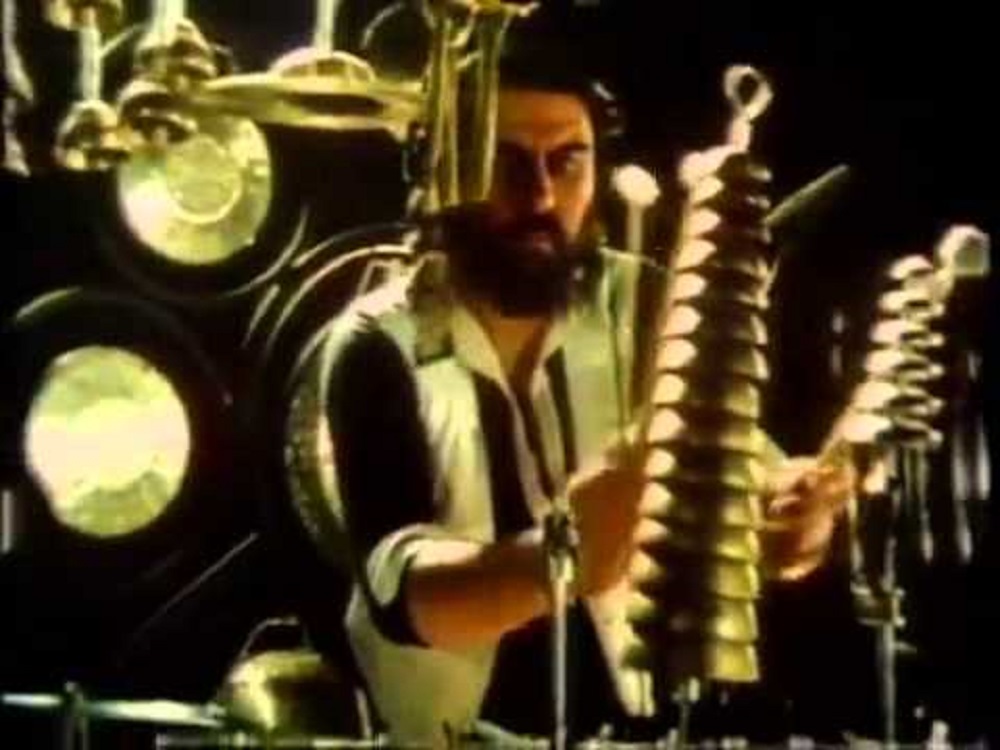
J’ai eu la chance d’être présenté à Vangelis lors d’un concert qu’il donnait à Athènes en Grèce. Nous étions depuis devenus des amis très proches. Ce que nous avions de commun Vangelis et moi, c’est de composer la musique sans ne jamais l’écrire.
Vangelis naît le à Agría, village limitrophe de Vólos. Il commence à jouer du piano à l’âge de quatre ans et donne la première représentation publique de ses propres compositions à l’âge de six ans. Autodidacte, il n’a aucune connaissance du solfège.
En 1981, Vangelis travaille avec le réalisateur Hugh Hudson pour composer la bande originale des Chariots de feu. En 1982, la consécration lui vient avec l’Oscar de la meilleure musique de film. Il n’est pas présent pour recevoir le prix, c’est le présentateur William Hurt qui récupère le prix à sa place. Cette même année, il commence à travailler avec le réalisateur Ridley Scott. Il compose alors la musique de Blade Runner pour laquelle il est nommé au BAFTA Awards, ainsi qu’aux Golden Globes en 1983.
Am avut norocul să fiu prezentat lui Vangelis în timpul unui concert pe care l-a susținut la Atena, Grecia. De atunci devenim prieteni foarte apropiați. Ceea ce eu și Vangelis aveam în comun era să compunem muzică fără să o scriem vreodată.
Vangelis s-a născut pe 29 martie 1943 în Agría, un sat de la marginea Volosului. A început să cânte la pian la vârsta de patru ani și a susținut prima interpretare publică a propriilor sale compoziții la vârsta de șase ani. Autodidact, nu are cunoștințe de teoria muzicii.
În 1981, Vangelis a lucrat cu regizorul Hugh Hudson pentru a compune coloana sonoră pentru Chariots of Fire. În 1982, a primit recunoașterea cu Oscar pentru cea mai bună muzică de film. El nu este prezent pentru a primi premiul, prezentatorul William Hurt adună premiul în locul lui. În același an, a început să lucreze cu regizorul Ridley Scott. Apoi a compus muzica pentru Blade Runner pentru care a fost nominalizat la Premiile BAFTA, precum și la Globurile de Aur în 1983.
I was lucky enough to be introduced to Vangelis during a concert he gave in Athens, Greece. We had since become very close friends. What Vangelis and I had in common was composing music without ever writing it.
Vangelis was born on March 29, 1943 in Agría, a village bordering Volos. He began playing the piano at the age of four and gave the first public performance of his own compositions at the age of six. Self-taught, he has no knowledge of music theory.
In 1981, Vangelis worked with director Hugh Hudson to compose the soundtrack to Chariots of Fire. In 1982, he received recognition with the Oscar for best film music. He is not present to receive the award, presenter William Hurt collects the award in his place. That same year, he began working with director Ridley Scott. He then composed the music for Blade Runner for which he was nominated for the BAFTA Awards, as well as the Golden Globes in 1983.
Film complet version française / Bande annonce officielle en anglais .
Film complet versiunea franceză / Trailer oficial în engleză.
Full movie French version / Official trailer in English.
***** Nightbooks *****
Lorsque Netflix nous plonge dans le Fantastique
Alex Mosher, un jeune garçon vivant avec ses parents dans un appartement de Brooklyn écrit des histoires d’horreur. Le soir de Halloween, enragé, il décide qu’il n’écrira plus jamais et commence à ravager sa chambre. Il s’enfuit de l’appartement en prenant son carnet de nouvelles dans l’optique de le brûler. Mais alors qu’il prend l’ascenseur, Natacha, une sorcière le capture dans son appartement et exige de lui qu’il lui raconte une histoire terrifiante chaque jour.
***** Nightbooks *****
Când Netflix ne cufundă în Fantasy
Alex Mosher, un băiat care locuiește cu părinții săi într-un apartament din Brooklyn, scrie povești de groază. În noaptea de Halloween, înfuriat, decide că nu va mai scrie niciodată și începe să-și devasteze camera. Fuge din apartament luându-și cartea de știri cu intenția de a o arde. Dar în timp ce ia liftul, Natacha, o vrăjitoare îl prinde în apartamentul ei și îi cere să-i spună o poveste terifiantă în fiecare zi.
***** Nightbooks *****
When Netflix immerses us in Fantasy
Alex Mosher, a young boy living with his parents in a Brooklyn apartment writes horror stories. On Halloween night, enraged, he decides he’ll never write again and begins ravaging his room. He flees the apartment taking his news book with the intention of burning it. But as he takes the elevator, Natacha, a witch captures him in her apartment and demands that he tell her a terrifying story every day.
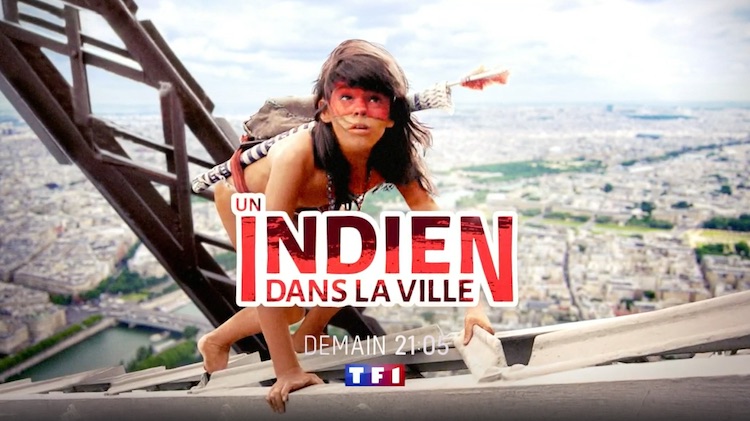
Un Indien dans la ville est un film français d’Hervé Palud, sorti en 1994.
Synopsis:
Parti en Amazonie retrouver son ex-femme Patricia afin de lui faire signer l’acte de divorce dans le but de pouvoir se remarier, Stéphane Marchadot, fringant opérateur sur le marché des matières premières, découvre avec stupeur qu’il est le père de Mimi-Siku, un enfant âgé de 13 ans. Convaincu par son fils qui rêve de découvrir la tour Eiffel, Stéphane décide de l’emmener avec lui, même s’il sait que le moment est mal venu. Il ne vit que pour son travail et n’a donc pas de temps à consacrer à son fils. Arrivé à Paris, il apprend par Richard Montignac, son associé, qu’ils ont encore une option d’achat de 4500 tonnes de soja dont le cours baisse dangereusement.
Se débarrasser du soja et gérer Mimi-Siku découvrant la civilisation, va être périlleux. Particulièrement parce que Mimi-Siku tombe amoureux de Sophie, la fille de Richard. Fort heureusement, leur situation financière étant soudain rétablie par une fantastique hausse du cours du soja, ils décident de fuir le monde moderne en s’installant avec les indiens d’Amazonie.
« Un indian în oraș »
Cinéclub
Un indian în orașeste un film francez de Hervé Palud, lansat în 1994.
Synopsis:
După ce a plecat în Amazon pentru a-și găsi fosta soție Patricia pentru a o pune să semneze certificatul de divorț pentru a se recăsători, Stéphane Marchadot, un comerciant de mărfuri impecabil, descoperă cu uimire că este tatăl lui Mimi – Siku, un băiat de 13 ani. Convins de visul fiului său de a descoperi Turnul Eiffel, Stéphane decide să-l ia cu el, deși știe că nu a sosit momentul. Trăiește doar pentru munca sa și, prin urmare, nu are timp de dedicat fiului său. Ajuns la Paris, a aflat de la Richard Montignac, partenerul său, că mai aveau posibilitatea de a cumpăra 4.500 de tone de soia, al cărei preț scădea periculos.
Să scapi de soia și să te ocupi cu Mimi-Siku de a descoperi civilizația va fi periculos. Mai ales că Mimi-Siku se îndrăgostește de Sophie, fiica lui Richard. Din fericire, situația lor financiară fiind brusc restabilită de o creștere fantastică a prețului soiei, au decis să fugă din lumea modernă și să se stabilească printre indienii din Amazon.
« An Indian in the city »
Cineclub
An Indian in the Cityis a French film by Hervé Palud, released in 1994.
Synopsis:
Having gone to the Amazon to find his ex-wife Patricia in order to have her sign the divorce certificate in order to be able to remarry, Stéphane Marchadot, a dashing operator on the raw materials market, discovers with amazement that he is Mimi’s father -Siku, a 13 year old child. Convinced by his son who dreams of discovering the Eiffel Tower, Stéphane decides to take him with him, even though he knows the timing is not right. He only lives for his work and therefore has no time to devote to his son. Arriving in Paris, he learned from Richard Montignac, his partner, that they still had an option to purchase 4,500 tonnes of soybeans, the price of which was falling dangerously.
Getting rid of soy and facing Mimi-Siku who discovers civilization will be perilous. Notably because Mimi-Siku falls in love with Sophie, Richard’s daughter. Fortunately, their financial situation being suddenly restored by a fantastic rise in the price of soya, they decided to flee the modern world by settling among the Indians of the Amazon.
L’histoire débute sur une planète lointaine (la planète verte) habitée par une civilisation évoluée et égalitaire, vivant en parfaite harmonie avec la nature dans des paysages immaculés, et qui pratiquent certaines disciplines comme la télépathie. Lors d’une réunion du conseil planétaire, les habitants font le constat que cela fait deux cents ans au moins qu’aucun volontaire ne s’est désigné pour visiter la Terre, au contraire d’autres planètes, qui déchaînent un enthousiasme très largement supérieur. Cherchant à en connaître les raisons, et profitant de l’expérience d’Osam, le dernier à s’y être aventuré, à l’époque napoléonienne, ils font le constat que la Terre abrite encore probablement une civilisation arriérée caractérisée par les inégalités sociales, le racisme, la monnaie, etc., une situation que l’avènement de la révolution industrielle n’a pu que faire empirer. On y apprend ainsi que sur la planète verte il y a eu également une époque industrielle avec des biens de consommation, mais cette époque est désormais tellement lointaine qu’elle ne s’étudie qu’en cours d’archéologie. Les habitants sont d’avis qu’en « déconnectant » certains Terriens ils pourront aider cette civilisation à progresser plus rapidement.
Remerciments:
Je tenais à remercier du fond du cœur Coline Serreau qui a produit ce film et qui permet sa mise en ligne. Je voulais également remercier tous les acteurs techniciens qui ont permis par leur travail, la réalisation de ce chef d’œuvre, de cette fable des temps modernes.. Merci également à la distribution pour cet acte de Bravoure, cette gentillesse et cette confiance. Et merci à vous lecteurs qui découvrirez.
Lorsque nos âmes se confondent aux neiges éternelles…
Ce film est magnifique. Merci à Coline Serreau.
***** The Beautiful Green *****
Cineclub
Rezumat:
Povestea începe pe o planetă îndepărtată (planeta verde) locuită de o civilizație evoluată și egalitară, care trăiește în perfectă armonie cu natura în peisaje curate și care practică anumite discipline precum telepatia. În cadrul unei ședințe a consiliului planetar, locuitorii notează că au trecut cel puțin două sute de ani de când vreun voluntar s-a desemnat să viziteze Pământul, spre deosebire de alte planete, care declanșează un entuziasm mult mai mare. Căutând să cunoască motivele și profitând de experiența lui Osam, ultimul care s-a aventurat acolo, în timpul erei napoleoniene, ei au remarcat că probabil că Pământul încă găzduiește o civilizație înapoiată, caracterizată de inegalități sociale, rasism, monedă. etc., o situație pe care apariția revoluției industriale a putut doar să o agraveze. Aflăm că pe planeta verde a existat și o eră industrială cu bunuri de larg consum, dar această eră este acum atât de îndepărtată încât poate fi studiată doar la orele de arheologie. Locuitorii cred că „deconectând” anumiți pământeni pot ajuta această civilizație să progreseze mai repede.
Un mare mulțumesc:
Am vrut să-i mulțumesc din suflet lui Coline Serreau care a produs acest film și care a făcut posibilă punerea lui online. De asemenea, am vrut să mulțumesc tuturor actorilor tehnici care, prin munca lor, au permis realizarea acestei capodopere, a acestei fabule moderne. Mulțumesc și distribuției pentru acest act de Curaj, această bunătate și această încredere. Și vă mulțumesc, cititorilor care veți descoperi.
Când sufletele noastre se contopesc cu zăpada veșnică…
Acest film este magnific. Mulțumesc lui Coline Serreau.
***** The Beautiful Green *****
Cineclub
Synopsis:
The story begins on a distant planet (the green planet) inhabited by an evolved and egalitarian civilization, living in perfect harmony with nature in pristine landscapes, and who practice certain disciplines such as telepathy. During a meeting of the planetary council, the inhabitants note that it has been at least two hundred years since any volunteer has designated themselves to visit Earth, unlike other planets, which unleash much greater enthusiasm. . Seeking to know the reasons, and taking advantage of the experience of Osam, the last to have ventured there, during the Napoleonic era, they noted that the Earth is probably still home to a backward civilization characterized by social inequalities. , racism, currency, etc., a situation that the advent of the industrial revolution could only make worse. We learn that on the green planet there was also an industrial era with consumer goods, but this era is now so distant that it can only be studied in archeology classes. The inhabitants believe that by “disconnecting” certain Earthlings they can help this civilization progress more quickly.
Thanks:
I wanted to thank from the bottom of my heart Coline Serreau who made this film and who made it possible to put it online. I also wanted to thank all the actors and the technicians who, through their work, made it possible to create this masterpiece, this modern-day fable. Thank you also to the casting for this act of courage, this kindness and this trust. And thank you to you readers who will discover.
When our souls merge with the eternal snow..
This movie is magnificent. Thanks to Coline Serreau.
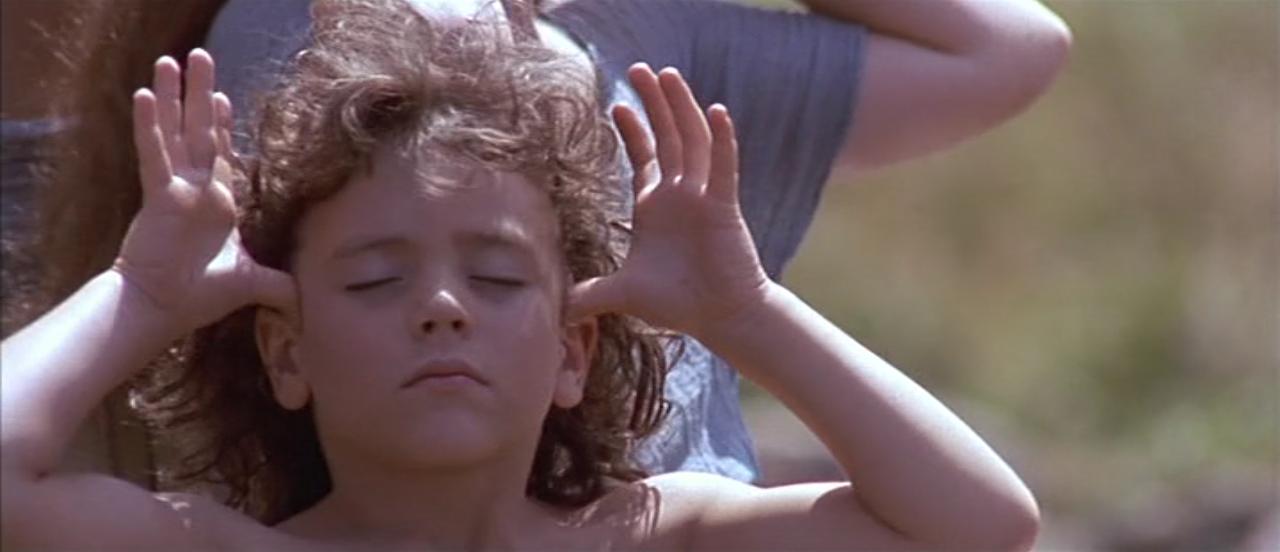
La star du film, Ovidiu Balan, avait 11 ans lorsque le film a été tourné. C’est un Tsigane roumain qui a été pris sous l’aile du réalisateur avec l’aide du gouvernement français. Gatlif a créé le film comme une œuvre sur les thèmes de la gitane «agitée et libre», contrairement à la notion de peuplement proposée pour les populations sinti et rom. dans l’UE. Contrairement à des films similaires sur les enfants des rues, tels que Salaam Bombay ou Pixote, ce film était conçu comme un conte de fées d’une sorte d’esprit mythique qui touche la vie des parias dans une société remplie de préjugés contre les gitans.
Mondo, micul român exilat
Ovidiu Balan
Vedeta filmului, Ovidiu Balan, avea 11 ani când a fost filmat filmul. El este un țigan român care a fost luat sub aripa regizorului cu ajutorul guvernului francez Gatlif a creat filmul ca o lucrare pe temele țiganului „neliniștit și liber”, spre deosebire de noțiunea de așezări propusă pentru populațiile sinti și romi. în UE. Spre deosebire de filmele similare despre copiii străzii, cum ar fi Salaam Bombay sau Pixote, acest film a fost conceput ca un basm de un fel de spirit mitic care atinge viața oamenilor proscriși într-o societate plină de prejudecăți împotriva țiganilor.
Mondo, the little exiled Romanian
Ovidiu Balan
The film’s star, Ovidiu Balan, was 11 when the film was shot. He is a Romanian Gypsy who was taken under the director’s wing with help of the French government Gatlif created the film as a work on the themes of the « restless and free » gypsy, in contrast to the notion of settlements proposed for Sinti and Roma populations in the EU. Unlike similar films about street children, such as Salaam Bombay or Pixote, this film was intended as a fairy tale of sorts of a mythical spirit who touches the lives of outcast people in a society filled with prejudice against the gypsies.
Sweet Lullaby une chanson du groupe français Deep Forest, du genre musique du monde ou « électronique ethnique ». Cette chanson est le titre phare de leur premier album Deep Forest sorti en 1992. Ce groupe s’est spécialisé dans le mélange de musique électronique de type dance ou new age avec des chants d’ethnies africaines, amérindiennes, etc.
Origine : Rorogwela
Sweet Lullaby signifie en anglais « douce berceuse », et utilise des extraits d’une berceuse traditionnelle des ethnies baegu et fateleka des îles Salomon, interprétée par Afunakwa et enregistrée aux alentours de 1970 par l’ethnomusicologue Hugo Zemp dans le village de Fulinui. La berceuse, chantée en langue baegu et appelée Rorogwela, est le chant d’un jeune garçon demandant à son frère cadet d’arrêter ses pleurs et lui expliquant que l’amour de leurs parents décédés veille sur eux.
La chanson d’Afunakwa est intégrée en 1973 à un LP intitulé Solomon Islands: Fateleka and Baegu Music from Malaita publié par la Musical Sources collection de l’UNESCO. Seuls quelques couplets (marqués ci-dessous en gras) ont été réutilisés dans Sweet Lullaby. L’interprétation d’Afunakwa fut également réutilisée par le disc jockey italien Mauro Picotto dans sa chanson Komodo, et la mélodie reprise par le saxophoniste norvégien Jan Garbarek, dans sa chanson intitulée erronément Pygmy Lullaby. Afunakwa est décédée au cours des années 1990.
Merci à Virgin Recors.
***** Deep forest *****
« Sweet Lullaby »
Sweet Lullaby o melodie a trupei franceze Deep Forest, din genul world music sau „ethnic electronic”. Această melodie este piesa de titlu de pe primul lor album Deep Forest lansat în 1992. Acest grup s-a specializat în amestecarea muzicii de dans electronic sau new age cu melodii din grupuri etnice africane, native americane etc.
Origine: Roroghela
Sweet Lullaby înseamnă „dulce cantic de leagăn” în engleză și folosește fragmente dintr-un cântec de leagăn tradițional al grupurilor etnice baegu și fateleka din Insulele Solomon, interpretat de Afunakwa și înregistrat în jurul anului 1970 de etnomuzicologul Hugo Zemp în satul Fulinui. Cântecul de leagăn, cântat în limba baegu și numit Rorogwela, este cântecul unui băiat care îi cere fratelui său mai mic să-și oprească plânsul și îi explică că dragostea părinților lor decedați îi veghează.
Cântecul lui Afunakwa a fost inclus în 1973 pe un LP intitulat Insulele Solomon: Fateleka and Baegu Music from Malaita publicat de colecția Surse muzicale UNESCO. Doar câteva versete (marcate mai jos cu caractere aldine) au fost refolosite în Sweet Lullaby. Interpretarea lui Afunakwa a fost refolosită și de disc jockey-ul italian Mauro Picotto în melodia sa Komodo, iar melodia interpretată de saxofonistul norvegian Jan Garbarek, în melodia sa intitulată eronat Pygmy Lullaby. Afunakwa a murit în anii 1990.
Mulțumiri Virgin Records.
***** Deep forest *****
« Sweet Lullaby »
Sweet Lullaby a song by the French band Deep Forest, from the world music or “ethnic electronic” genre. This song is the title track from their first album Deep Forest released in 1992. This group specialized in mixing electronic dance or new age music with songs from African, Native American, etc. ethnic groups.
Origin: Rorogwela
Sweet Lullaby uses excerpts from a traditional lullaby of the baegu and fateleka ethnic groups of the Solomon Islands, performed by Afunakwa and recorded around 1970 by ethnomusicologist Hugo Zemp in the village of Fulinui. The lullaby, sung in the Baegu language and called Rorogwela, is the song of a young boy asking his younger brother to stop his crying and explaining to him that the love of their deceased parents is watching over them.
Afunakwa’s song was included in 1973 on an LP titled Solomon Islands: Fateleka and Baegu Music from Malaita published by the UNESCO Musical Sources collection. Only a few verses (marked below in bold) were reused in Sweet Lullaby. Afunakwa’s rendition was also reused by Italian disc jockey Mauro Picotto in his song Komodo, and the melody covered by Norwegian saxophonist Jan Garbarek, in his song erroneously titled Pygmy Lullaby. Afunakwa died in the 1990s.
Vidéo: Film intégral: « Frayeurs » Version française et version originale.
Video: Film complet: „City of the Living Dead” versiunea franceză și versiunea originală.
Video: Full movie: “City of the Living Dead” French version and original version.
Frayeur
« L’âme qui aspire à l’éternité doit se soustraire au joug de la mort. Toi, vagabond au seuil des ténèbres, viens! »
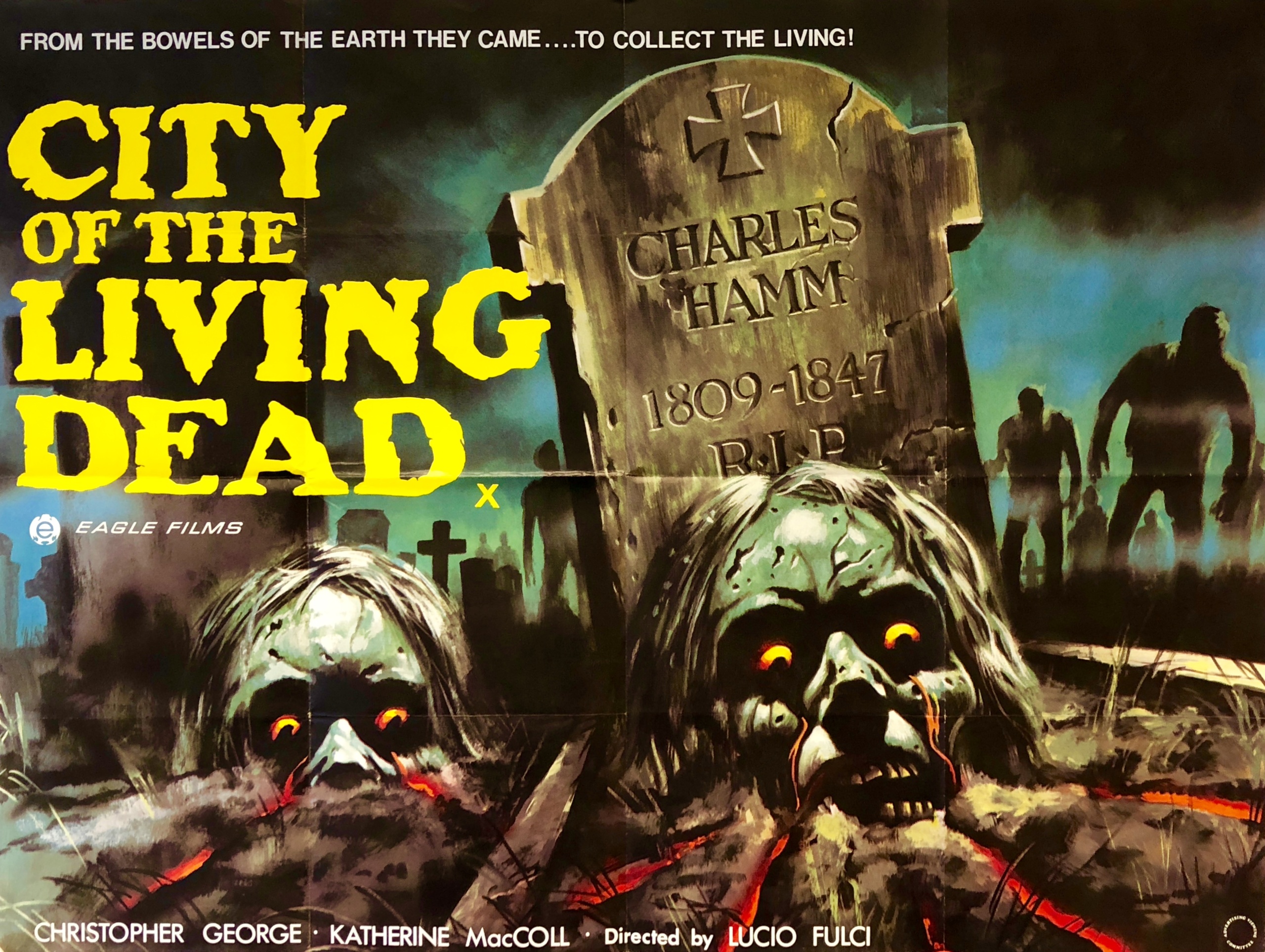
Frayeur (Paura nella città dei morti viventi) est un film d’épouvante fantastique italien réalisé par Lucio Fulci et sorti en 1980. Il s’agit du premier volet de la trilogie de la mort, complétée l’année suivante par L’Au-delà et La Maison près du cimetière.
Résumé:
Le suicide par pendaison d’un prêtre ouvre une porte de l’enfer qui libère des morts-vivants. Une médium et un journaliste font équipe pour la refermer avant la Toussaint.
City of the leaving dead
„Sufletul care aspiră la veșnicie trebuie să scape de jugul morții Tu, rătăcitor pe pragul întunericului, vino!”
City of the leaving dead (Paura nella città dei morti vivei) este un film horror italian, fantasy, regizat de Lucio Fulci și lansat în 1980. Este prima parte a trilogiei Death, finalizată anul următor de The Au- beyond și The House near the cimitir.
Rezumat:
Sinuciderea prin spânzurarea unui preot deschide o poartă către iad care eliberează strigoii. Un mediu și un jurnalist fac echipă pentru a închide această ușă înainte de Ziua Tuturor Sfinților.
City of the leaving dead
“The soul that aspires to eternity must escape the yoke of death. You, wanderer on the threshold of darkness, come!”
City of the leaving dead (Paura nella città dei morti vivei) is an Italian fantasy horror film directed by Lucio Fulci and released in 1980. It is the first part of the Death trilogy, completed the following year by The Au- beyond and The House near the cemetery.
Summary:
Suicide by hanging of a priest opens a gate to hell that releases the undead. A medium and a journalist team up to close it before All Saints’ Day.
Mise en garde: Les images de ce film peuvent choquer. Il est déconseillé aux moins de 13 ans de visionner ce qui suit!
Prudență: Imaginile din acest film pot șoca. Nu este recomandat copiilor sub 13 ani să vizualizeze următoarele!
Caution: The content of this film may offend the sensitivity of the youngest. It is not recommended for children under 13 to view the following!